Vs intent
You need a model decision, not another tool list
This page is for teams already considering Veo 3 and Sora and trying to decide which one should render a product ad concept.
Model comparison
Veo 3 and Sora both matter for AI video, but they solve different creative jobs. Veo 3 is attractive when generated sound, vertical or horizontal aspect ratios, and short prompt-to-video clips are central. Sora is attractive when a team wants OpenAI-style cinematic scene generation and prompt or image based exploration.
For product marketers, the model is only one decision. A weak product brief, vague hook, or untested image concept can waste generations no matter which model you choose.
TrendVis sits before the model choice: it turns product context into creative angles, validates scenes with images first, then routes the best concept to the model that fits the shot.
Direct answer
Choose Veo 3 when native sound generation and short vertical or horizontal clips are central to the test. Choose Sora when the creative brief needs cinematic exploration in the OpenAI ecosystem. Use TrendVis before either model when the business goal is product ad output, because the prompt, image, hook, and scene should be validated before rendering.
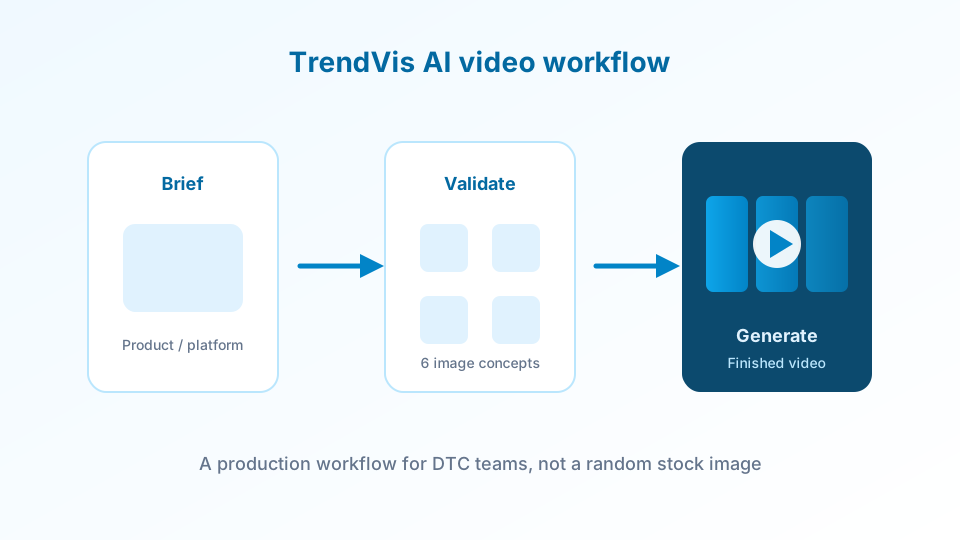
This is not a claim that one model is universally better. It is a workflow decision for ecommerce teams trying to ship usable ad creative.
| Decision point | Veo 3 | Sora | Practical read |
|---|---|---|---|
| Core fit | Short generated videos where sound generation and aspect-ratio choices matter. | Cinematic prompt or image based video exploration inside the OpenAI ecosystem. | Pick by the shot and delivery channel, not by model hype. |
| Audio | Google documents sound generation as a supported Veo 3 capability. | OpenAI positions current Sora generation around video creation; check the current Sora docs for route-specific audio behavior. | If sound is the must-have test variable, verify the exact Sora route before comparing. |
| Product workflow risk | A strong model can still miss packaging, materials, or product scale if the brief is vague. | Cinematic output can look impressive but still fail as a product ad if the hook is weak. | Both benefit from image-first validation before video spend. |
| Best TrendVis use | Route a validated product scene to Veo when audio, vertical clips, or fast iteration matter. | Route a validated product scene to Sora when the concept needs cinematic composition. | TrendVis keeps the creative decision upstream from the model decision. |
Vs intent
This page is for teams already considering Veo 3 and Sora and trying to decide which one should render a product ad concept.
Ad spend
A model comparison is only useful after the hook, product angle, and visual scene are clear enough to judge.
Creative fit
Some ads need generated sound and fast vertical clips. Others need cinematic scene continuity. TrendVis keeps those routes separate.
The platform starts with the marketing job, then chooses the model route after the creative concept is strong enough to render.
Step 1
Define the product, audience, offer, platform, visual constraints, and claim boundaries before prompting any video model.
Step 2
TrendVis creates multiple product ad angles so the team can compare hooks instead of sending one generic prompt to a premium model.
Step 3
Image validation catches weak framing, incorrect product emphasis, and off-brand visuals before video credits are spent.
Step 4
After the scene is validated, TrendVis can route the concept toward Veo 3, Sora, Kling, Hailuo, Wan, or another model based on the shot requirements.
Veo 3 is better when the product ad needs native sound generation and short vertical or horizontal clips. Sora may be better for cinematic prompt or image based exploration. The best route depends on the creative job, not just the model name.
Yes. Google Vertex AI documentation lists sound generation as a supported capability for Veo 3 generation routes. Teams should still check the current route and account access before planning production.
They can, but direct use is risky when the product angle is not validated. TrendVis is useful before Sora because it creates product briefs, angles, and image validation before a video render.
TrendVis is designed to keep model choice downstream from creative validation. The workflow helps teams decide whether a validated product scene needs Veo, Sora, Kling, Hailuo, Wan, or another model route.
TrendVis turns product briefs into creative angles, validates them as images, then upgrades only the strongest concept to video.
Start in the studio