| Local ComfyUI | Software is free, but the real cost is GPU hardware, storage, electricity, updates, model downloads, and failed experiments | Creators who want the lowest marginal cost, private files, custom nodes, and full model control after setup | Not truly free if you need to buy a GPU or spend days fixing drivers, nodes, and model conflicts. |
| Stability AI API | Stability uses a credit system where 1 credit equals $0.01, with request cost varying by model and feature | Apps, agencies, and developers that want official endpoints, spend limits, and easier accounting per request | API cost is predictable, but you give up some local model flexibility and must watch feature-specific credit use. |
| Comfy Cloud | Standard is listed at $20/month with 4,200 credits; Creator is listed at $35/month with 7,400 credits | Creators who like native ComfyUI workflows but do not want local GPU setup or manual cloud machines | Credits and workflow runtime limits matter, especially when image, upscale, and video nodes are combined. |
| RunComfy | On-demand machines range from lower-cost 16GB VRAM tiers to A100, H100, and H200 class machines billed by time | Advanced ComfyUI users who need bigger VRAM, saved environments, API deployment, or occasional heavy runs | Hourly billing rewards focused sessions. Idle machines and oversized GPUs can erase the savings quickly. |
| Raw GPU rental | RunPod and similar hosts charge by GPU type and time, with storage and network choices affecting the bill | Technical users who can manage containers, files, extensions, and model setup without a higher-level UI | Cheaper compute can become expensive once setup time, storage persistence, and failed runs are included. |
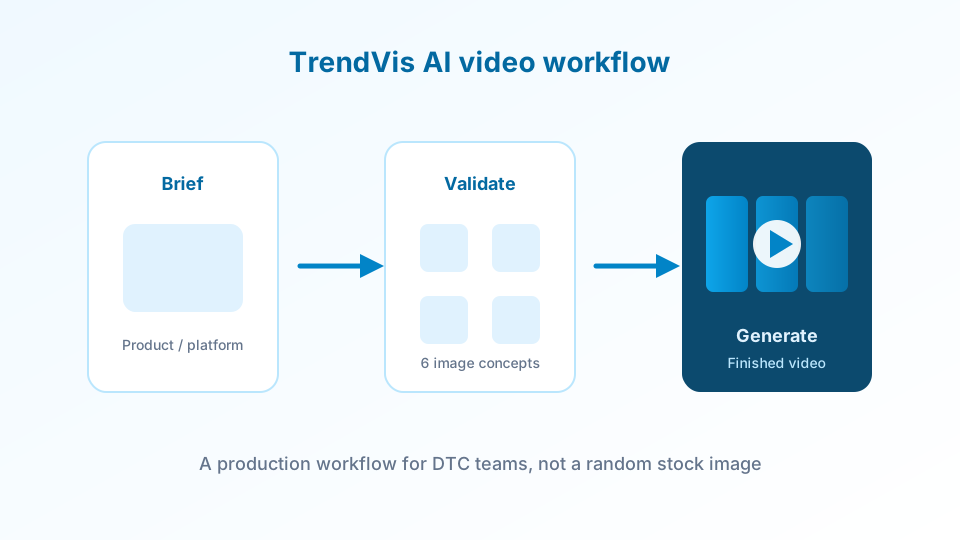
| TrendVis image-first workflow | TrendVis starts from a monthly creative workflow plan and uses image validation before costly video upgrades | DTC marketers who care less about the model brand and more about approved ad frames, hooks, and product accuracy | It is a workflow layer, not a replacement for every Stable Diffusion local or API use case. |