Choose Kling for motion tests
If you have a product image and need three motion options, Kling is usually the cheaper way to learn what movement works before committing to final editing.
Kling is the better first render for many product clips.
Kling AI vs Runway
TL;DR: Kling AI vs Runway is not a simple quality race. Kling is the better first pick for affordable motion tests; Runway is better when the clip needs editing, apps, and finishing tools around the model.
Kling is strongest when you start from a still image and want believable motion without paying a premium editor price. It is popular for creator clips, product movement, character motion, and social-first scenes where a few seconds of clean movement matters most.
Runway is broader. You are paying for generation plus a creative workspace: video apps, editing, storage, audio tools, third-party models, and Gen-4 quality. That makes Runway stronger for teams that need a full creative suite rather than a single model.
Direct answer
Kling AI vs Runway comes down to motion value versus creative control. Kling is usually the better first pick for affordable image-to-video tests and realistic movement. Runway is better when you want a broader editor, Gen-4 control, asset management, and higher-end finishing tools.
Kling AI vs Runway comes down to motion value versus creative control. Kling is usually the better first pick for affordable image-to-video tests and realistic movement. Runway is better when you want a broader editor, Gen-4 control, asset management, and higher-end finishing tools.
| Plan or route | Cost signal | Best for | Caveat |
|---|---|---|---|
| Image-to-video quality | Kling usually wins on value; Runway wins when editing context matters | Animating a product photo, character frame, or social visual with clear motion | Runway can still produce better final assets when its editor and apps are part of the job. |
| Text-to-video quality | Both can work; Runway often feels more polished for directed creative scenes | Runway for open creative work, Kling for simpler short social actions | Text-only prompts are riskier in both tools because the model invents every visual detail. |
| Motion realism | Kling is often the safer low-cost motion test | Human movement, object movement, camera moves, and short action beats | Fast movement, hands, and multi-subject scenes can still break in either model. |
| Price model | Kling uses credit memberships; Runway Standard is $12/month with 625 credits | Kling for lower-cost exploration, Runway for teams using the whole suite | Credit consumption changes by duration, resolution, mode, and provider. |
| Free testing | Runway gives 125 one-time credits; Kling free credits and offers can change | Testing the same image prompt in both tools before paying | Free output can include watermarks, queues, and limits that block client use. |
| Best final workflow | Use Kling first, Runway later if editing or Gen-4 finish is needed | Social ads, UGC-style product shots, Reels, Shorts, and fast creative tests | For premium campaigns, test both and judge by final clip, not brand reputation. |
If you have a product image and need three motion options, Kling is usually the cheaper way to learn what movement works before committing to final editing.
Kling is the better first render for many product clips.
Runway becomes stronger when you need storage, apps, audio, editing, Gen-4 output, or multiple creative tools in one browser workspace.
Runway is the better workspace, not always the cheaper generator.
For high-value work, test the same reference image in both tools. Pick the clip with better product fidelity, movement, and editability.
Side-by-side testing beats loyalty to one model.
Use a product image, campaign key visual, or approved frame. This makes the Kling and Runway comparison fair because both tools receive the same visual target.
Ask for one action, one camera move, and one mood. Big prompt stacks make it hard to know whether the model or the prompt caused the problem.
Judge product shape, motion realism, background stability, face or hand quality, and editability. The best model is the one that fits the publish format.
If Kling produces the motion, finish elsewhere only if needed. If Runway gives better control and editing, keep the project inside Runway.
Kling AI can be better for affordable image-to-video motion tests. Runway can be better when you need Gen-4 output, editing tools, apps, storage, and finishing in one place.
Kling is often cheaper for short motion tests, while Runway starts at $12 per user per month billed annually with 625 monthly credits. Exact cost depends on mode, duration, and resolution.
Use Runway if you want broader creative control and editing context. Use Kling if the scene is short, social-first, and focused on one clean motion.
Create the still frame first, test the same image-to-video prompt in both tools, score motion and product accuracy, then finish in the tool that gives the cleanest clip.
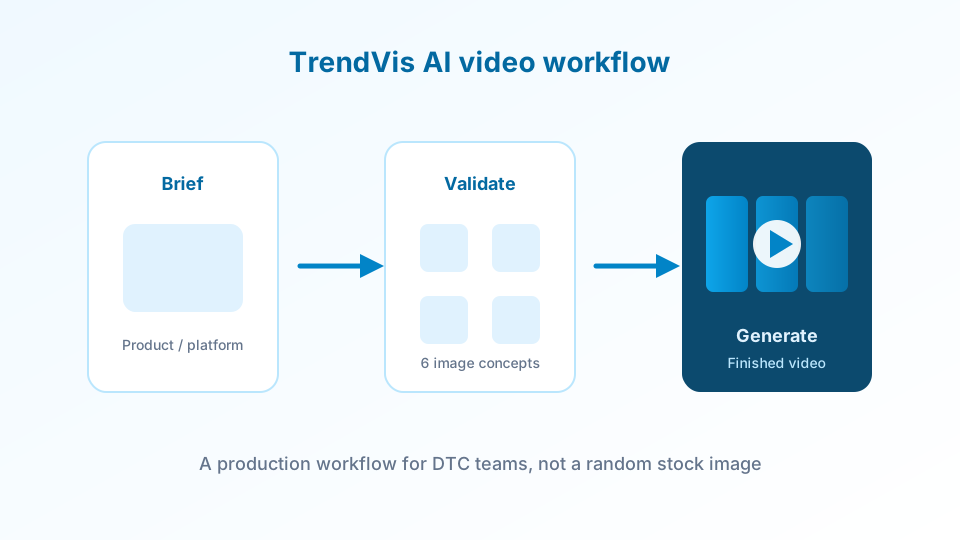
TrendVis turns product briefs into creative angles, validates them as images, then upgrades only the best concept to video.
Start in the studio