Veo-style fit
You need sound and scene realism
Native audio matters when dialogue, ambient sound, or synchronized sound is part of the output, not just decoration.
Model routing
The best AI video model changes by job. Veo is strong when native audio and high-fidelity output matter. Runway is a mature creative suite with clear credit-based plans. Luma is useful for image-to-video and physically styled motion. Kling and similar models can be strong for fast product-video variants. Sora-style workflows are useful when cinematic prompt following is the priority.
TrendVis does not pretend one model wins every prompt. Its value is routing: define the ad job, validate the product frame, then choose the model that fits the motion need and budget.
For commercial teams, the winning metric is not the prettiest demo. It is the cheapest path to a usable product clip that keeps the product, offer, and hook intact.
Direct answer
Use Veo-style models when native audio and high-fidelity scenes matter, Runway when you want a mature suite and credit planning, Luma when image-to-video motion and physical feel matter, Kling-style tools for fast variants, and TrendVis when you need to decide which model should get the final render.
This table compares model families by practical production decision, not hype.
| Decision point | Model-family strength | TrendVis routing role | Practical read |
|---|---|---|---|
| Native audio | Google describes Veo 3.1 as supporting high-fidelity video with natively generated audio through the Gemini API. | TrendVis routes audio-dependent concepts toward native-audio models instead of silent image-to-video flows. | Use native-audio models only when sound is part of the creative job. |
| Credit economics | Runway and Luma publish credit-based pricing where seconds, resolution, and model choice change usable output cost. | TrendVis reduces wasted cost by validating the frame and hook before rendering. | Compare cost by usable finished seconds. |
| Product consistency | All generative video models can drift on packaging, logos, hands, and object permanence. | TrendVis makes product visibility and brand checks part of the workflow before upgrade. | Product ads need consistency more than generic cinematic style. |
| Variant speed | Fast model families are useful for testing several hooks, but the output may need filtering. | TrendVis helps generate and score multiple creative angles before choosing the expensive render. | Use fast variants for exploration and stronger models for the final clip. |
Veo-style fit
Native audio matters when dialogue, ambient sound, or synchronized sound is part of the output, not just decoration.
Runway fit
Runway is useful when teams want a broader creative suite and can plan credit usage around seconds and quality settings.
TrendVis fit
TrendVis helps teams avoid choosing a model before they have proven the product angle, hook, and visual frame.
Model routing starts with the ad job, then moves to model selection.
Step 1
State whether the clip needs product demo, cinematic mood, native audio, UGC-style proof, localization, or fast hook testing.
Step 2
Validate product visibility, composition, offer clarity, and platform fit before video generation.
Step 3
Match model choice to motion, sound, resolution, speed, and budget instead of starting from popularity.
Step 4
Track how many renders were needed for one usable clip. That number matters more than the nominal plan price.
For commercial workflows, compare Veo-style native-audio models, Runway, Luma, Kling-style tools, and Sora-style workflows by job. There is no universal winner; the best model depends on audio needs, product consistency, speed, resolution, and cost per usable clip.
Veo is especially relevant when native audio and high-fidelity scenes matter. Runway and Luma may be better fits for teams that need suite workflows, image-to-video motion, or different credit economics.
Compare cost by usable finished seconds, not only by monthly plan price. Track credits, resolution, duration, failed renders, and how many attempts are needed for one publishable clip.
TrendVis adds the planning and routing layer: product brief, creative angles, image validation, model selection, and a cleaner path from idea to usable product clip.
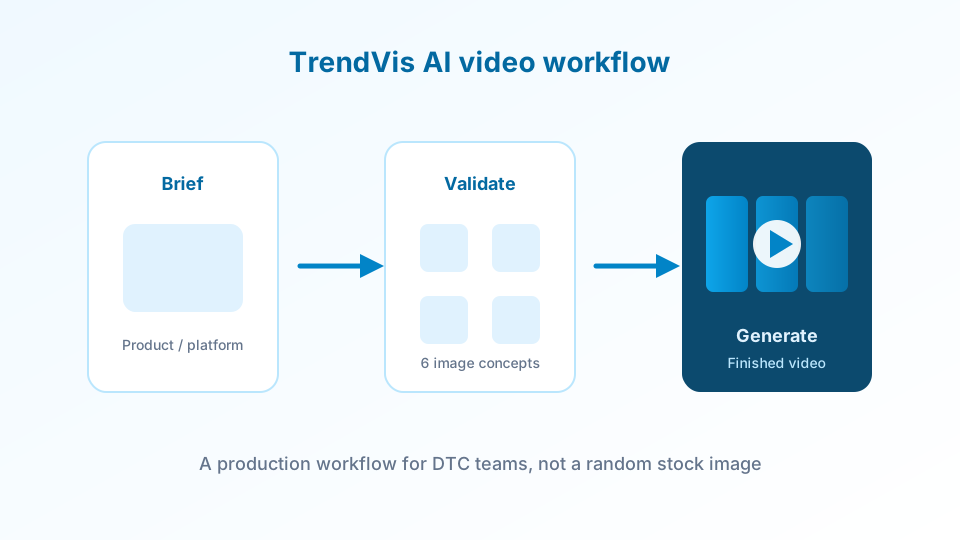
TrendVis turns product briefs into creative angles, validates them as images, then upgrades only the strongest concept to video.
Start in the studio