Best for style transfer
Use Runway when you need the clearest editing surface and creative control. It is strongest when video-to-video is part of a larger editing job.
Runway is the control pick.
AI Video to Video
TL;DR: the best AI video-to-video generator is Runway for editing control, Kling for motion-preserving transformation, Pika for fast social effects, and Luma for credit-transparent video-to-video cost planning.
Video-to-video is different from text-to-video. You start with an existing clip and ask the model to restyle, alter, animate, reframe, or transform it while preserving enough motion and subject identity to stay useful.
That makes the decision more practical than hype. The best tool is the one that keeps the source motion, avoids identity drift, fits the clip length, and gives you enough control without burning credits on failed style transfers.
Direct answer
The best AI video-to-video generator in 2026 is Runway when editing control matters, Kling when realistic motion transfer matters, Pika when fast social effects matter, and Luma when you need clear credit planning across video-to-video resolutions, draft settings, and final upgrades.
The best AI video-to-video generator in 2026 is Runway when editing control matters, Kling when realistic motion transfer matters, Pika when fast social effects matter, and Luma when you need clear credit planning across video-to-video resolutions, draft settings, and final upgrades.
| Plan or route | Cost signal | Best for | Caveat |
|---|---|---|---|
| Runway | Runway API lists Aleph 2.0 at 28 credits per second, with broader plans starting at Free and Standard | Directed edits, video transformation, creative control, asset workflows, and teams that need a suite around the model | Runway is powerful, but broad tools can cost more if the source clip and creative goal are not clear. |
| Kling | Kling motion-control docs price VIDEO 3.0 motion control by seconds, with Standard and Professional modes | Motion-preserving changes, character movement, action clips, camera moves, and realistic short-form social shots | Exact consumer plan pricing and queue behavior can vary, so verify inside the live product before bulk work. |
| Pika | Pika lists video-to-video Pikaffects and text/image-to-video credit costs across Free and paid plans | Fast social transformations, effects-led clips, memes, creator formats, and short video variants | Pika is best for social energy and effects, not always for premium realism or long production scenes. |
| Luma | Luma publishes video-to-video credit costs by model and resolution, including Ray and third-party routes | Teams that want clear cost planning before changing a source video at 540p, 720p, or 1080p | Higher-resolution video-to-video costs rise quickly, so draft low and upgrade only promising clips. |
| TrendVis | TrendVis starts with product brief and image validation before video upgrade | DTC teams that need to decide whether a clip deserves style transfer before spending video credits | It is not only a model switch; the workflow still needs a clear ad angle and source clip. |
| Best low-risk route | Use short 5-second tests, lower resolution, and one style change before final production | Avoiding failed transforms, identity drift, and credit burn on clips that were not ready | Long clips and complex style requests make every tool less predictable. |
Use Runway when you need the clearest editing surface and creative control. It is strongest when video-to-video is part of a larger editing job.
Runway is the control pick.
Use Kling when the source clip has movement you want to preserve. Its value is highest when action, camera movement, or character motion drives the result.
Kling is the motion pick.
Use Pika when the goal is a quick transformation that feels native to TikTok, Reels, Shorts, memes, or creator-led formats.
Pika is the fast effects pick.
The source video should have stable framing, visible subject, and one clear motion. Messy footage makes style transfer harder for every model.
Do not change style, camera, subject, background, and lighting all at once. One clear transformation makes the result easier to judge.
Five seconds is enough to test identity stability, style strength, and motion quality. Longer clips should wait until the short draft works.
TrendVis keeps video spend tied to validated concepts. Once a short style transfer works, then test higher resolution or longer duration.
AI video-to-video generation starts with an existing clip and uses a model to restyle, edit, transform, or reframe it while trying to preserve motion, subject identity, and timing.
Runway is best for editing control, Kling is best for motion-preserving transformation, Pika is best for fast social effects, and Luma is useful for credit-transparent video-to-video planning.
Video-to-video is better when you already have a source clip and want to preserve motion. Text-to-video is better when you need the model to invent the whole scene from scratch.
Use short source clips, lower draft resolution, one style change at a time, and upgrade only the result that keeps motion and identity stable.
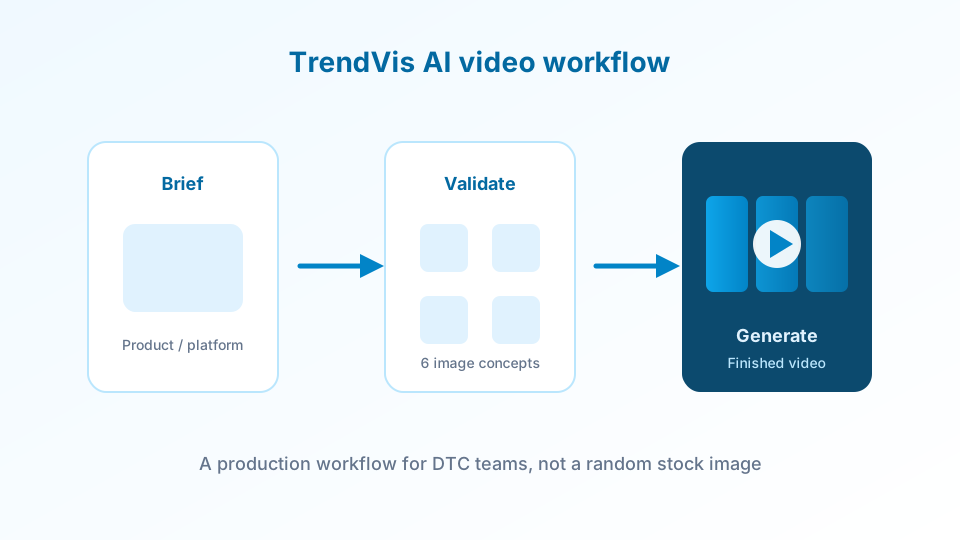
TrendVis turns product briefs into creative angles, validates them as images, then upgrades only the best concept to video.
Start in the studio