Use Topaz for clean product detail
Topaz is the safest pick when the source image is real or highly accurate and you need larger output. It is strong for texture, edges, and print-friendly files.
Use Topaz when fidelity matters.
AI Image Upscaler
TL;DR: the best AI image upscaler is Topaz Gigapixel for serious detail recovery, Krea for fast creative enhancement, Adobe Firefly for Adobe teams, and Magnific for stylized high-detail images.
Upscaling is not magic. It works best when the source image already has clean product edges, accurate labels, and usable lighting. If the original image has warped packaging or broken text, an upscaler can make the defect more visible.
This comparison looks at Topaz Gigapixel, Adobe Firefly, Magnific, Krea, and Ideogram Topaz Upscale so you can pick the right enhancement path before sending images to ads, product pages, or video models.
Direct answer
The best AI image upscaler is Topaz Gigapixel for maximum detail, Krea for fast creative enhancement, Adobe Firefly for Adobe teams, and Magnific for stylized detail recovery. Start with the cleanest source image, then upscale only the version you plan to publish.
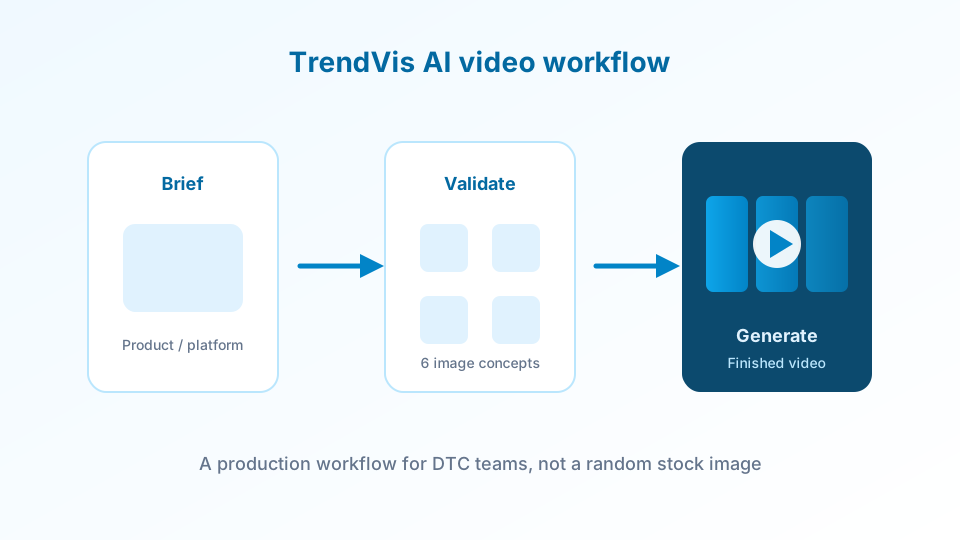
The best AI image upscaler is Topaz Gigapixel for maximum detail, Krea for fast creative enhancement, Adobe Firefly for Adobe teams, and Magnific for stylized detail recovery. Start with the cleanest source image, then upscale only the version you plan to publish.
| Plan or route | Cost signal | Best for | Caveat |
|---|---|---|---|
| Topaz Gigapixel | Topaz now positions Gigapixel inside its paid Topaz ecosystem, with Topaz Studio listed at $69/month on the pricing page | Product images, ecommerce crops, print files, archival photos, and images where natural detail matters more than style | Strong detail recovery is useful only when the product shape and text are already correct. |
| Adobe Firefly | Firefly Standard is listed at $9.99/month with 2,000 monthly generative credits; higher plans add more credits | Adobe teams editing product photos, backgrounds, generative fill, and brand assets in a familiar tool chain | Firefly is often best for edit and background work, not always the sharpest dedicated enlargement choice. |
| Magnific | Premium upscaling and enhancement plans are sold through Magnific, with pricing and offers best checked at checkout | Stylized portraits, concept art, fashion, food, and creative images that benefit from invented detail | Magnific can add new texture. That is powerful for art, but risky for regulated product detail. |
| Krea | Krea uses compute units, individual plans, and optional one-time compute packs for extra usage | Fast web-based enhancement, creative upscaling, posters, social assets, and teams that want generation plus editing | Check plan rights and compute use before using outputs for paid campaigns. |
| Ideogram Topaz Upscale | Ideogram lists Topaz Upscale by output size: $0.12 for 2K, $0.24 for 4K, and $0.48 for 8K per input image | API users who want a simple per-image upscale line item alongside Ideogram generation | It is convenient for API accounting, but not a full replacement for a desktop review workflow. |
| TrendVis workflow | TrendVis focuses on selecting the right still before video upgrade, so upscaling happens only after an image earns it | DTC teams that need product ad frames, thumbnails, and landing-page images that can later become video references | Do not upscale every draft. Upscale approved frames and save budget for the winner. |
Topaz is the safest pick when the source image is real or highly accurate and you need larger output. It is strong for texture, edges, and print-friendly files.
Use Topaz when fidelity matters.
Creative upscalers can make a flat AI image feel richer by adding texture and depth. That can help campaign art, but it can also invent product details.
Use creative enhancement when style is allowed.
Firefly makes sense when the image will be finished in Photoshop, Express, or another Adobe path. The editing context can matter more than raw upscale power.
Adobe fit is a workflow advantage.
Do not upscale images with unreadable labels, warped packaging, bad hands, or broken product geometry. Enhancement usually sharpens those mistakes.
For ecommerce, pick a tool that preserves detail. For campaign art, a creative upscaler may be allowed to add texture, but review every product claim visually.
A hero image, marketplace crop, Pinterest pin, YouTube thumbnail, and print ad need different sizes. Pick the output size after you know where the asset will ship.
Review the image at phone size, desktop size, and any ad placement size. If it looks artificial, reduce enhancement or return to a cleaner source image.
Topaz Gigapixel is the best fit for serious detail recovery. Krea is strong for fast creative work, Firefly fits Adobe teams, and Magnific works well for stylized enhancement.
It can improve softness, but it cannot reliably fix wrong labels, warped packaging, bad product shape, or missing detail. Start from the cleanest source possible.
Free upscaling can be enough for tests and small social assets. Paid tools become worth it when you need higher resolution, batch work, better detail, or commercial confidence.
Usually yes for a final reference frame, but only after choosing the strongest still image. A clean high-resolution source gives video models a better anchor.
TrendVis turns product briefs into creative angles, validates them as images, then upgrades only the best concept to video.
Start in the studio