Skip TrendVis first
You need a 3D asset, not a video
If the output must be a model file, exact turntable, CAD-like view, or repeatable geometry, start in a 3D tool and use video generation later.
Buyer guide
The best 3D AI video generator depends on whether you need real 3D control or a 3D-looking marketing clip. If you need a reusable mesh, camera path, product rig, or exact geometry, use a real 3D pipeline first. If you need a short product-motion ad that looks dimensional, image-to-video models can be faster.
TrendVis fits the second job: product scene planning, hook selection, still-image validation, and routing the strongest concept into video. It is not a mesh editor, but it helps teams avoid spending video credits on a weak product angle.
For cost control, treat every 3D-style video as a two-step workflow: validate the image or frame first, then render only the best motion candidate.
Direct answer
Use a real 3D tool when geometry, reusable assets, or precise camera control matter. Use Luma, Runway, Veo, Kling, or similar video models when the goal is a short 3D-looking clip. Use TrendVis when the commercial bottleneck is choosing the product angle and validating the scene before paying for video generation.
Most searchers mix three different jobs: 3D asset creation, cinematic AI video, and product ad creative. Splitting them prevents wasted tool spend.
| Decision point | Dedicated 3D or model tool fit | TrendVis fit | Practical read |
|---|---|---|---|
| Reusable 3D asset | Use a 3D design or product-visualization workflow when you need geometry, rigging, or repeatable camera control. | TrendVis does not create reusable 3D meshes; it is a creative workflow for product scenes and video concepts. | Do not use text-to-video as a substitute for real 3D production assets. |
| 3D-looking ad clip | Image-to-video models can turn a strong product frame into a short dimensional motion clip. | TrendVis helps generate and validate the product frame before the video render step. | Validate the still before spending credits on motion. |
| Cost planning | Official pricing pages show video models charge by credits, seconds, resolution, or plan limits; exact value changes by model and setting. | TrendVis reduces wasted renders by forcing angle selection before upgrade. | The cheapest render is the one you do not run until the scene is proven. |
| Product truth | Video models can drift on logo, packaging, texture, scale, and object permanence. | TrendVis makes product visibility and brand fit explicit before the clip is generated. | For ecommerce, product accuracy beats cinematic novelty. |
Skip TrendVis first
If the output must be a model file, exact turntable, CAD-like view, or repeatable geometry, start in a 3D tool and use video generation later.
TrendVis fit
If the buyer needs to see packaging, use case, texture, and hook in a short clip, TrendVis can plan and validate the ad concept.
Budget
Runway, Luma, Veo, Kling, and Sora-style workflows use different limits and credit models, so compare cost by usable seconds, not sticker plan price.
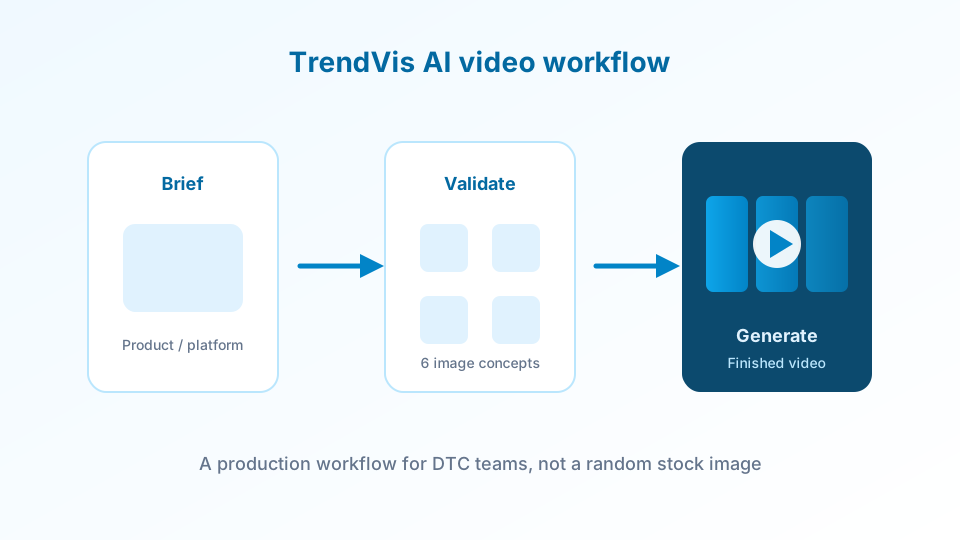
The reliable workflow is brief first, image second, video third.
Step 1
Decide whether the clip needs a product spin, exploded view, use-case demo, packaging reveal, or cinematic atmosphere.
Step 2
Generate or upload product frames and reject anything with broken geometry, unreadable logo, or weak composition.
Step 3
Use stronger cinematic models for realism, faster models for cheap variants, and native-audio models only when sound matters.
Step 4
Upgrade the clearest product frame to video after the hook and scene have already passed a visual check.
For true 3D assets, use a dedicated 3D workflow. For short 3D-looking marketing clips, compare image-to-video models such as Luma, Runway, Veo, Kling, or Sora-style tools. TrendVis fits when you need to plan and validate the product scene before rendering.
No. TrendVis is not a 3D modeling tool. It helps teams create product-led video concepts, validate images, and route winning ideas into video generation.
Still-frame validation catches broken product geometry, bad logo placement, weak composition, and poor hook clarity before video credits are spent.
It can be, because video tools often charge by credits, seconds, resolution, or plan limits. Compare the cost of usable finished seconds, not only the monthly plan price.
TrendVis turns product briefs into creative angles, validates them as images, then upgrades only the strongest concept to video.
Start in the studio