| GPT image models | OpenAI lists GPT-Image-2 at token-based image pricing, with GPT image work billed separately from ChatGPT plans | General product concepts, ad frames, visual reasoning, prompt following, image edits, and teams that already use OpenAI APIs | The prompt asked for GPT-4o, but the current OpenAI pricing page now centers GPT-Image-2 for image generation. |
| Midjourney | Basic $10, Standard $30, Pro $60, Mega $120 monthly; annual billing lowers the monthly equivalent | High-style visuals, mood boards, campaign art direction, concept art, and polished social creative where taste matters | GPU time matters: one image prompt usually uses about one minute, while video prompts use more. |
| Ideogram | API images list from $0.03 for 4.0 Turbo to $0.10 for 4.0 Quality, with app plans sold separately | Posters, ads, packaging drafts, thumbnails, and any asset where words must be readable inside the image | It is strongest when type and layout matter; pure photoreal style may still favor GPT image or Midjourney. |
| Flux | BFL sells pay-as-you-go API access; open-weight Flux.1 dev and schnell routes can also run through other hosts | Developers, batch image generation, controllable pipelines, lower-cost tests, and teams that want model choice | Open-weight flexibility brings setup work, hosting choices, and license checks that a web app hides. |
| Adobe Firefly | Firefly Standard lists $9.99 monthly with 2,000 credits; higher Firefly plans add more monthly credits | Adobe Creative Cloud users, brand teams, Photoshop workflows, generative fill, and asset edits inside familiar tools | Firefly is comfortable for production teams, but style quality can feel less striking than Midjourney. |
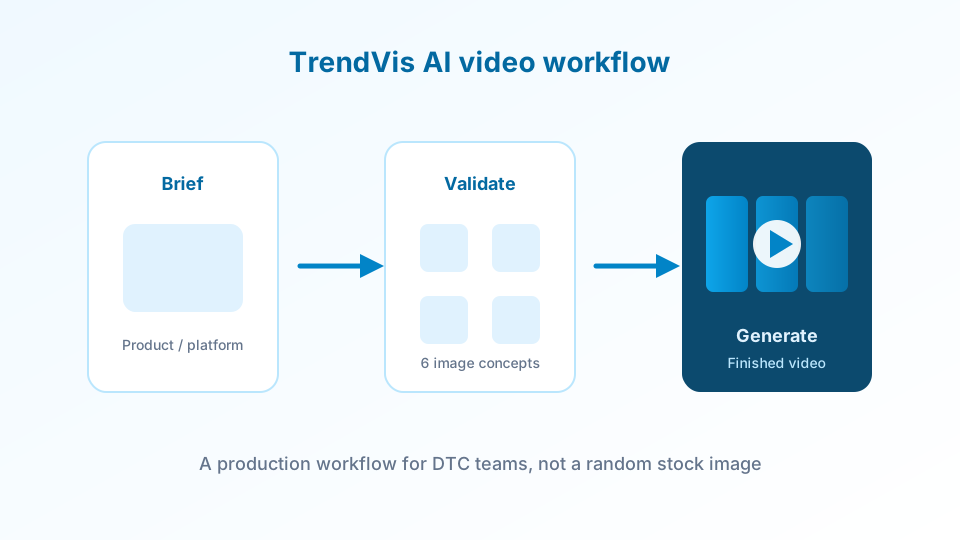
| TrendVis workflow | TrendVis plans start at $29 monthly and use image validation before video upgrade | DTC teams that need product ad concepts, social hooks, and image-first tests before paying for video | TrendVis is a workflow layer; it helps choose and validate images rather than replacing every source model. |