Best static-to-motion tool
Kling is the safest first test when you have a strong product image and need realistic movement. It usually handles simple camera pushes, turns, and lifestyle motion well.
Kling is the product-animation pick.
Best AI Animation Generator
TL;DR: the best AI animation generator in 2026 is Pika for playful effects, Kling for realistic product motion, Runway for controlled production work, Luma for cinematic camera movement, and Wan for open technical workflows.
Animation is a broad word in AI video. It can mean turning a product photo into a moving ad, animating a character, creating a 2D loop, building a cinematic 3D camera move, or generating a full scene from text.
Because the use cases are different, one winner is misleading. A creator making a meme clip should not choose the same tool as a brand animating a watch, a game studio testing character motion, or a developer building an open pipeline.
This ranking compares Pika, Kling, Runway, Luma, Seedance, and Wan across static-to-motion, text-to-animation, 2D versus 3D fit, cost signals, and practical production control.
Direct answer
Choose Pika for quick social animation effects, Kling for realistic image-to-video motion, Runway for editable production workflows, Luma for cinematic movement, Seedance for natural reference-led motion, and Wan for open model control. For product marketing, validate the still image first, then animate only the strongest concept.
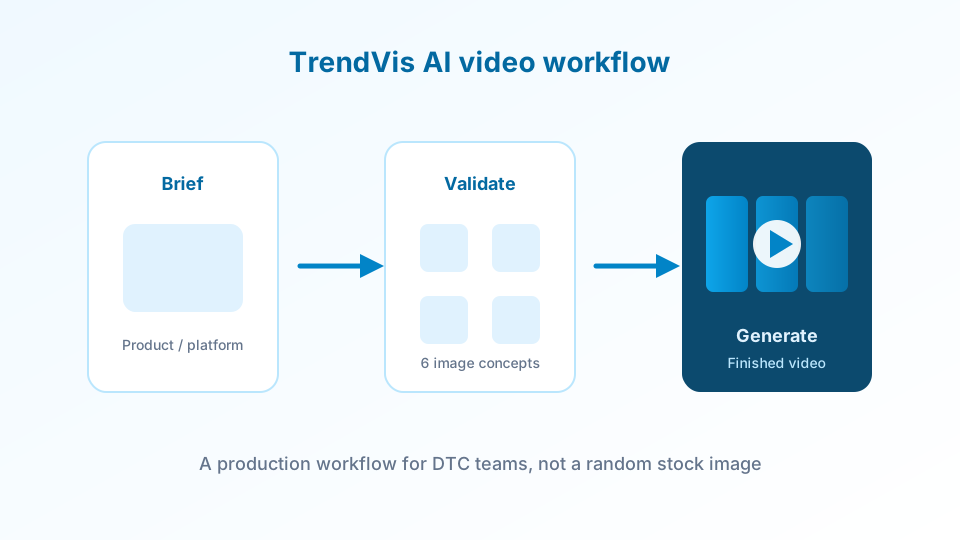
Choose Pika for quick social animation effects, Kling for realistic image-to-video motion, Runway for editable production workflows, Luma for cinematic movement, Seedance for natural reference-led motion, and Wan for open model control. For product marketing, validate the still image first, then animate only the strongest concept.
| Plan or route | Cost signal | Best for | Caveat |
|---|---|---|---|
| Pika | Pika pricing lists monthly video credits and effects such as Pikascenes, Pikadditions, Pikaswaps, and Pikatwists | Playful social clips, creator effects, fast image animation, memes, and stylized motion | Not always the best for premium product realism or enterprise review workflow. |
| Kling | Kling VIDEO 3.0 uses credit costs by duration, resolution, and audio mode | Realistic image-to-video, product turns, fashion movement, human action, and short social ads | Prompt discipline matters; too many actions reduce reliability. |
| Runway | Runway web plans and API pricing support generation plus a broader creative suite | Production teams that need editability, review, asset handling, and animation inside a larger workflow | More tools can mean more complexity for simple one-off animation. |
| Luma | Luma credit tables expose Ray and partner-model costs by task, duration, and resolution | Cinematic camera moves, premium visual depth, and scenes where motion should feel shot rather than templated | High-resolution routes can become expensive without image-first selection. |
| Seedance | ByteDance highlights motion stability and multimodal reference support | Natural social motion, character or scene references, and animation guided by image, video, or audio context | Access and price depend on the platform route used. |
| Wan | Wan2.2 provides open model options for text-to-video and image-to-video workflows | Developers, researchers, and teams building custom animation pipelines or private deployments | Self-hosting shifts cost from subscription to hardware and engineering. |
Kling is the safest first test when you have a strong product image and need realistic movement. It usually handles simple camera pushes, turns, and lifestyle motion well.
Kling is the product-animation pick.
Pika is best when the goal is fun, stylized, fast, and social. It is less about physical realism and more about turning a still into a shareable animated moment.
Pika is the creator-effects pick.
Luma and Runway are better when camera movement, depth, and polished review workflow matter. Use them for hero clips, campaign assets, and cinematic product reveals.
Luma and Runway fit premium motion.
Name whether you need a product move, character action, 2D loop, 3D camera motion, social effect, or full text-generated scene. The answer determines the model.
Most image animation fails because the starting frame is weak. Fix product framing, lighting, text, and composition before adding motion.
Prompts like rotate, float, pour, blink, unfold, zoom, or orbit are easier to evaluate than stacked instructions. Add complexity only after the first movement works.
A TikTok effect, Shopify product video, cinematic hero asset, and developer demo have different quality bars. Judge the output in its real destination.
Pika is best for playful social effects, Kling for realistic image-to-video motion, Runway for controlled production work, Luma for cinematic camera movement, and Wan for open technical workflows.
Yes. Image-to-video tools such as Kling, Pika, Runway, Luma, Seedance, and Wan can animate a still image, but results depend heavily on the quality of the starting frame and motion prompt.
Kling is usually the best first test for realistic product motion. Luma and Runway are better for premium or edited outputs, while TrendVis helps validate the still image before generating video.
AI animation works for both, but tools differ. Pika fits stylized and 2D-like effects, while Luma, Runway, Kling, and Seedance are stronger for realistic 3D-feeling motion.
TrendVis turns product briefs into creative angles, validates them as images, then upgrades only the best concept to video.
Start in the studio