Best product prompt
Use: close-up of the product on a clean surface, camera slowly pushes in, soft studio light, product shape stays unchanged, background remains stable. That is clear and testable.
One product, one camera move.
Kling AI Tutorial
TL;DR: the best Kling AI results come from a strong reference image, one subject, one motion, one camera move, short test duration, and only then upgrading resolution or native audio.
Kling can produce excellent realistic motion, but it rewards simple direction. Many weak outputs come from prompts that ask for too much: multiple actions, changing backgrounds, exact logo text, complex hands, and camera moves that conflict with the subject.
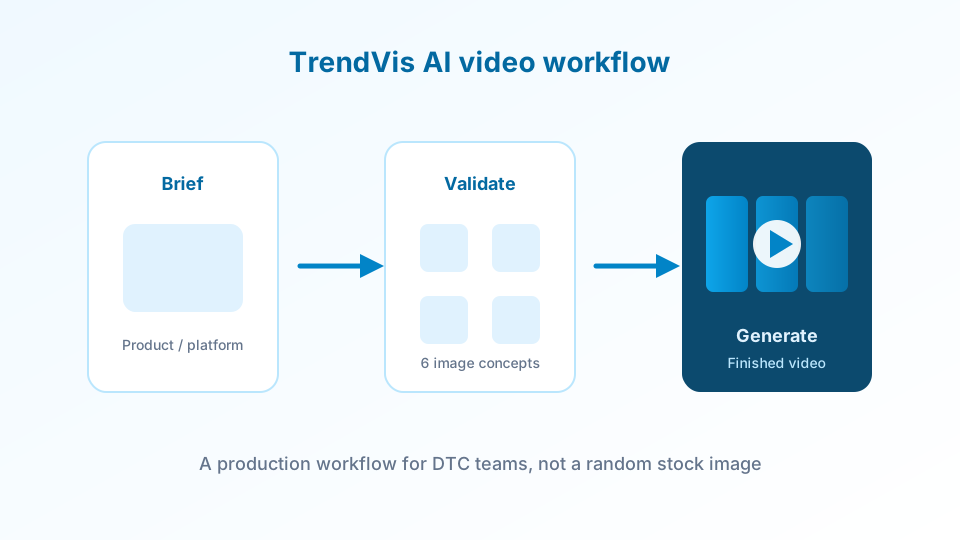
The practical workflow is image first, video second. Validate the frame, lock the product, describe the motion, choose duration and resolution, then render a short draft before spending on higher settings.
This Kling AI tutorial covers prompt structure, parameter choices, image-to-video versus text-to-video, common mistakes, real examples, and how to compare Kling against Runway, Luma, or Seedance before committing video budget.
Direct answer
Use Kling AI with a narrow prompt and a clear image-to-video workflow. Start with 720p or short no-audio drafts, test one motion at a time, and upgrade only after the product remains stable. Kling is strongest for realistic short motion, not overloaded cinematic scenes with many moving parts.
Use Kling AI with a narrow prompt and a clear image-to-video workflow. Start with 720p or short no-audio drafts, test one motion at a time, and upgrade only after the product remains stable. Kling is strongest for realistic short motion, not overloaded cinematic scenes with many moving parts.
| Plan or route | Cost signal | Best for | Caveat |
|---|---|---|---|
| Image-to-video | Best first mode when product accuracy matters because the image anchors shape, color, and composition | Product ads, fashion clips, portraits, food, beauty, packaging, and ecommerce listing video | The source image must already be clean; Kling cannot fully rescue a bad frame. |
| Text-to-video | Useful for exploratory scenes where the model can invent the environment | Concept tests, backgrounds, mood boards, and scenes without strict product identity | Less reliable when exact product, logo, packaging, or character continuity is required. |
| 720p draft | Lower-credit draft route for checking motion before committing to higher quality | Testing prompt direction, camera move, timing, and whether a concept is worth improving | Do not judge final brand quality from a draft alone. |
| 1080p or higher | Better for final exports when the motion and product identity are already validated | Paid ads, website product clips, client review, and polished social output | Higher settings magnify wasted spend if the prompt is still uncertain. |
| Native audio | Kling VIDEO 3.0 charges more credits per second when native audio is enabled | Scenes where speech, ambient sound, or synchronized action is essential | Add audio late; test visual motion first. |
| Motion control | Useful when you need a specific trajectory instead of generic movement | Controlled product reveals, camera path tests, and repeatable motion concepts | Too much control can make the prompt brittle if the base frame is unclear. |
Use: close-up of the product on a clean surface, camera slowly pushes in, soft studio light, product shape stays unchanged, background remains stable. That is clear and testable.
One product, one camera move.
Use: a person picks up the bottle and gently places it beside a gym bag, natural hand motion, realistic lighting, no label changes. It describes visible action without overloading the scene.
Keep human motion simple.
Avoid asking for a full commercial, three camera moves, multiple actors, exact slogan text, scene transition, and voiceover in one generation. Split that into separate tests.
Complexity belongs in editing, not one render.
Crop the product clearly, remove confusing background elements, avoid tiny text, and make sure the main subject has enough space to move inside the frame.
Use subject, action, camera, lighting, and constraint. Example: the sneaker rotates slowly on a pedestal, camera dolly-in, bright studio light, shape and logo stay consistent.
Generate a short no-audio draft before increasing resolution, duration, or audio. If the motion fails at the draft stage, fix the prompt instead of buying a bigger render.
If the clip matters, test the same image in Luma, Runway, or Seedance. Kling may win, but comparison prevents spending all credits on the wrong model route.
Use a strong reference image, ask for one clear motion, keep the camera move simple, test a short draft first, and upgrade resolution or audio only after the product stays stable.
Kling is especially strong for image-to-video when product or subject accuracy matters. Text-to-video is better for exploratory scenes where exact identity is less important.
Avoid multiple characters, exact small text, complex hand work, several camera moves, long scene transitions, and asking for a full commercial in one generation.
Use native audio after the visual motion works. Audio costs more credits, so it is best reserved for final candidates that need synchronized sound or speech.
TrendVis turns product briefs into creative angles, validates them as images, then upgrades only the best concept to video.
Start in the studio