Product first
DTC teams need more than a synthetic speaker
Beauty, apparel, home, food, and gadget ads often need product texture, use-case framing, and hook clarity more than a person on camera.
Buyer guide
The best AI UGC video generator depends on what you mean by UGC. Some teams need a lifelike creator or avatar reading a script. Others need product-first social ads that look native to TikTok, Reels, and Shorts without making a talking head the hero.
TrendVis is strongest in the second workflow: product brief, trend assist, multiple creative angles, image validation, and AI video upgrade. It helps DTC teams test UGC-style product concepts before spending on polished video renders.
If your ad must show a human presenter, an avatar or video-agent platform may be the better first stop. If your ad must sell the product scene, texture, use case, and hook, TrendVis is usually the cleaner workflow.
Direct answer
Use an avatar platform when the UGC angle depends on a person speaking to camera. Use TrendVis when the UGC-style ad depends on product context, hooks, social formatting, and fast creative testing. The strongest workflow is usually image-first validation before video generation.
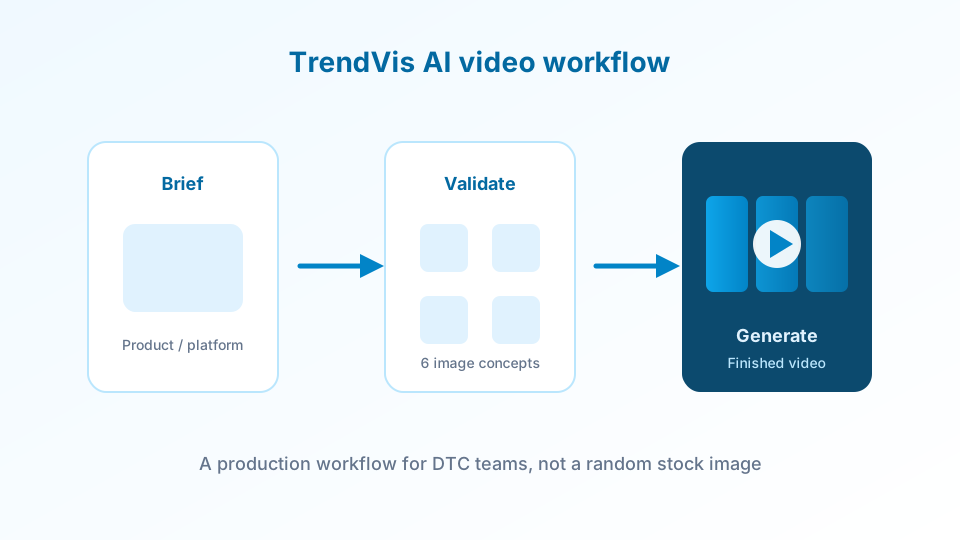
The right choice depends on whether the ad needs a synthetic person, a product scene, localization, or a fast testing workflow.
| Decision point | Common UGC tool fit | TrendVis fit | Practical read |
|---|---|---|---|
| Talking-head creator ad | Avatar or video-agent tools can generate presenter-led scripts with faces, voices, and localization. | TrendVis is not an avatar-first platform; use it when product visuals matter more than a presenter. | Choose avatar tools when the human speaker is the asset. |
| Product demo ad | Many UGC tools still start from a script and presenter format. | TrendVis starts from product, audience, offer, and social platform, then validates the visual concept. | Choose TrendVis when the buyer needs to see the product in use. |
| Creative testing | A one-shot UGC generator can create a finished video before the hook is proven. | TrendVis generates several angles and validates images before upgrading the winner to video. | For paid social, avoid spending all credits on the first idea. |
| Localization | Avatar and dubbing tools are often stronger for multilingual presenter videos. | TrendVis can support product-video concepting, but it is not a dubbing suite. | Use the tool category that matches the bottleneck. |
Product first
Beauty, apparel, home, food, and gadget ads often need product texture, use-case framing, and hook clarity more than a person on camera.
Native social
A strong UGC-style ad can be a product scene, product problem, comparison, or quick demo that feels native to a short-form feed.
Testing
The winner is rarely the first hook. TrendVis creates multiple directions before the team commits to video generation.
TrendVis treats UGC-style creative as a product and hook problem first, then a video generation problem second.
Step 1
The workflow captures what the product does, who it is for, what objection the ad must handle, and which platform the creative needs to fit.
Step 2
TrendVis creates several UGC-style angles such as problem-solution, routine demo, comparison, unboxing, use case, or objection handling.
Step 3
Static validation checks whether the product is visible, believable, on-brand, and correctly framed before any video render.
Step 4
Only the best scene moves into video generation, which helps keep video spend tied to a tested product idea.
For avatar-led UGC, use a tool built around presenters, voices, and localization. For product-led UGC-style ads, TrendVis is a better workflow because it starts with the product brief, creates several hooks, validates images, and then upgrades the best concept to video.
TrendVis is not an avatar-first UGC platform. It is better for product scenes, product demos, social ad concepts, image-to-video testing, and multi-model video routing.
Image validation catches weak hooks, poor product visibility, off-brand framing, and unrealistic scenes before video credits are spent. That matters when a team needs multiple paid social variants.
If the ad depends on a human presenter, choose an avatar or creator platform. If the ad depends on the product scene and hook, choose a product-first workflow like TrendVis.
TrendVis turns product briefs into creative angles, validates them as images, then upgrades only the strongest concept to video.
Start in the studio