Use lip sync
The speaker is the message
Training, localization, founder explainers, and spokesperson content benefit from lip sync because the face carries trust and clarity.
Buyer guide
The best AI lip sync video generator is usually an avatar or dubbing platform when the speaker is the asset. HeyGen is strong for avatar and API-led lip sync workflows. Synthesia is strong for business dubbing and translated presenter videos. Runway can help with talking-photo style outputs.
TrendVis is not a lip-sync studio. It is useful when the marketing goal is product-led creative and the face is optional. In that workflow, you validate the product scene and hook first, then decide whether a lip-synced presenter is needed at all.
This distinction matters for ad teams. A product ad often fails because the product is unclear, not because the presenter lips are imperfect.
Direct answer
Choose HeyGen or Synthesia when the video must preserve a speaker, avatar, dubbing, or translated lip movement. Choose Runway-style talking-photo tools for simple character dialogue. Choose TrendVis when the ad can sell through product scenes, hooks, and motion without making lip sync the core creative asset.
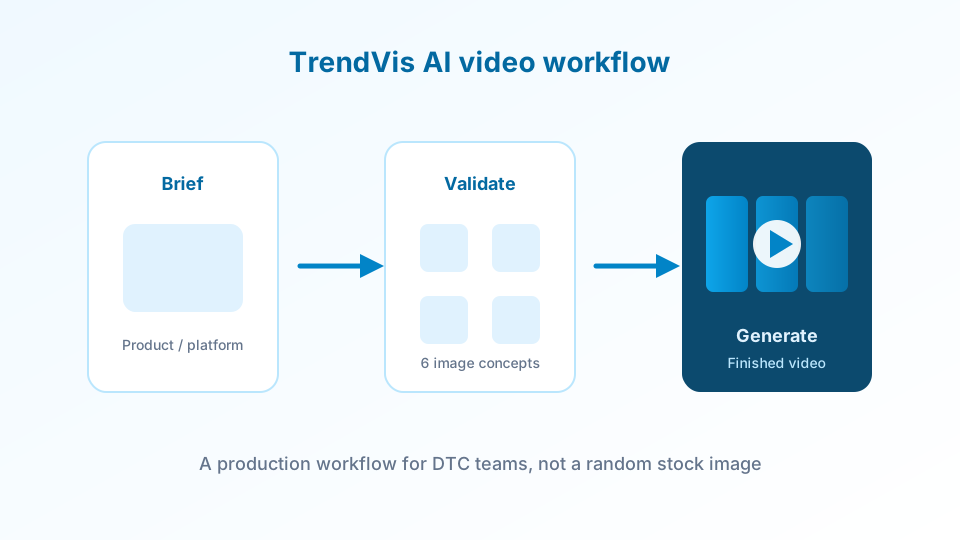
Lip sync tools solve a speaker problem. TrendVis solves a product-ad concept problem. The right choice depends on which problem is blocking the campaign.
| Decision point | Lip sync tool fit | TrendVis fit | Practical read |
|---|---|---|---|
| Translated presenter video | Synthesia and HeyGen-style workflows are built for dubbing, voices, avatars, and lip movement alignment. | TrendVis is not a dubbing suite and should not be used as the first tool for translated talking-head content. | Use lip sync tools when the speaker remains central. |
| Avatar UGC clip | Avatar platforms can create a presenter reading a script with synchronized speech. | TrendVis is better for UGC-style product scenes where a presenter is optional. | If the buyer needs to see the product, do not over-index on the face. |
| Talking photo | Runway and avatar tools can animate a face or image with dialogue. | TrendVis can plan the surrounding ad concept but does not animate mouths. | Use the right tool for the face animation layer. |
| Paid social testing | Lip sync output can be slow to iterate if every variant needs a presenter render. | TrendVis creates product hooks and image concepts before video upgrade. | Test the hook before committing to presenter renders. |
Use lip sync
Training, localization, founder explainers, and spokesperson content benefit from lip sync because the face carries trust and clarity.
Use TrendVis
Ecommerce and DTC ads often need product texture, use case, packaging, and offer clarity more than a perfectly synced synthetic speaker.
Hybrid
Use TrendVis for product scenes and a lip-sync tool for the opener, testimonial, or localized presenter segment.
Do not add a talking face by default. Add it when it improves the conversion job.
Step 1
If the bottleneck is translation, presenter consistency, or trust, use a lip-sync platform. If the bottleneck is product clarity, start with TrendVis.
Step 2
Create one presenter-led angle and one product-led angle so the team can compare the role of the face.
Step 3
Even presenter ads need product shots. Use TrendVis to test product scenes before rendering the final clip.
Step 4
Once the team knows whether the face or product carries the message, choose the matching generator.
For avatar and API-led lip sync, HeyGen is a strong fit. For business dubbing and translated presenter videos, Synthesia is a strong fit. For talking-photo style clips, Runway can be useful. TrendVis is better when the ad should focus on the product rather than a synced face.
No. TrendVis does not generate lip-synced presenter videos. It helps teams plan product-led ad concepts, validate images, and upgrade the best product scene to video.
Use lip sync when a founder, creator, testimonial, or localized presenter improves trust. If the ad depends on showing the product clearly, product-first video may be stronger.
Yes. Use TrendVis for product scenes and creative angles, then use a lip sync platform for presenter segments, translations, or spoken hooks.
TrendVis turns product briefs into creative angles, validates them as images, then upgrades only the strongest concept to video.
Start in the studio